Profile
Suzuk Ota Complex
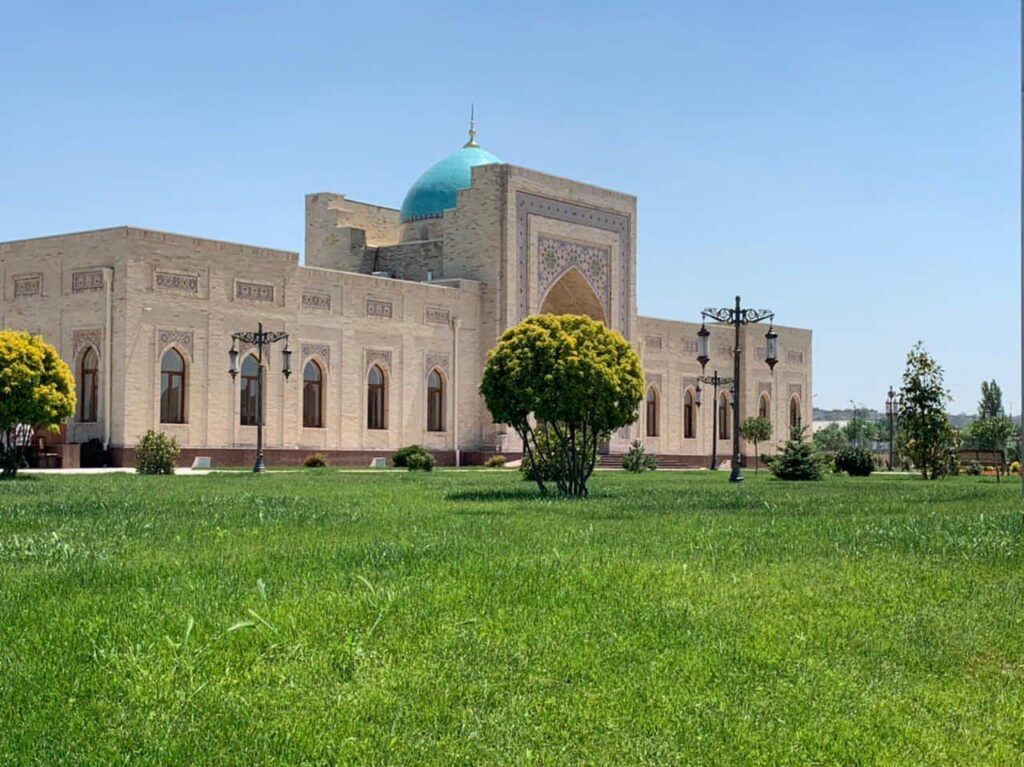
The Suzuk Ota Complex is a historic religious and cultural site in Tashkent, centred on the mausoleum and mosque of Hazrat Sheikh Mustafakul Khodja, known as Suzuk-Ota.
Originating from the spiritual and educational community he established in the 12th century, the site later took architectural form in the 14th century during the era of Amir Temur and continues to reflect Suzuk-Ota’s emphasis on learning, craftsmanship, and community life.
At the entrance to the Suzuk Ota complex, new facilities are being developed, including a parking area, museum, shop, and library. Within the complex itself are a mausoleum and a mosque, while 34 two-storey houses for artisans are planned on either side of the entrance.
Together, these additions are intended to turn the site into a centre for traditional handicrafts, continuing long-established local skills.
Suzuk-ota and His Legacy
Suzuk-ota, whose given name was Mustafokul, was born in 1140 in the village of Korachuk in Turkestan. He was the youngest son of Gavhari Khushtozh, the only daughter of Ahmad Yassavi. His grandfather affectionately called him “Suzuk,” meaning “beloved,” a name that stayed with him throughout his life.
As an adult, Suzuk-ota settled in a deserted area near the Tashkent makhallas of Chakar, Chukurukprik, and Mirlar, where he began developing a new community.
He invited Koran reciters, craftsmen, relatives, and friends from his homeland, encouraging them to build homes and pass on their knowledge. He became a mentor to many, teaching farming, handicrafts, and practical professions.
Suzuk-ota died in 1217, and the surrounding makhalla gained a reputation as a community of skilled masters.
Mausoleum, Mosque, and Later History
The cultural centre, created on the initiative of the head of state, is intended to honour Suzuk-ota’s legacy and revive traditional crafts. Although the mahalla underwent several name changes during the 20th century, its historic name, Suzuk-ota, was restored after independence.
The mausoleum and mosque, located in the makhalla guzar, are believed to date back to the time of Amir Temur. The mosque can accommodate around 700 worshippers and is notable for its large dome, measuring approximately 10 metres in diameter.
In 1930, the mosque and madrasah were closed and converted into a metal products enterprise, with offices and a warehouse built on the site of the former cells. The complex remained in this condition until 1990, after which its historical and religious significance was gradually restored.
Map
Sorry, no records were found. Please adjust your search criteria and try again.
Sorry, unable to load the Maps API.